Picking a vise is one of the biggest decisions in building a workbench. The right one makes everyday work easier for decades; the wrong one gets in the way every time you pick up a plane. Here's how the main types compare and how to choose.
Start with two questions
- What work do you do most? Planing board faces, planing edges, sawing joinery and holding parts for chopping all ask different things of a vise.
- What bench are you building? Traditional bench styles came with vises that suit their design. If you're building a Roubo, a Nicholson or a Scandinavian bench, the usual vises for that style are a good place to start.
Most benches end up with two vises: one on the front for holding work on edge, and one on the end (with a set of bench dogs) for holding work flat.
Front vises: holding work on edge
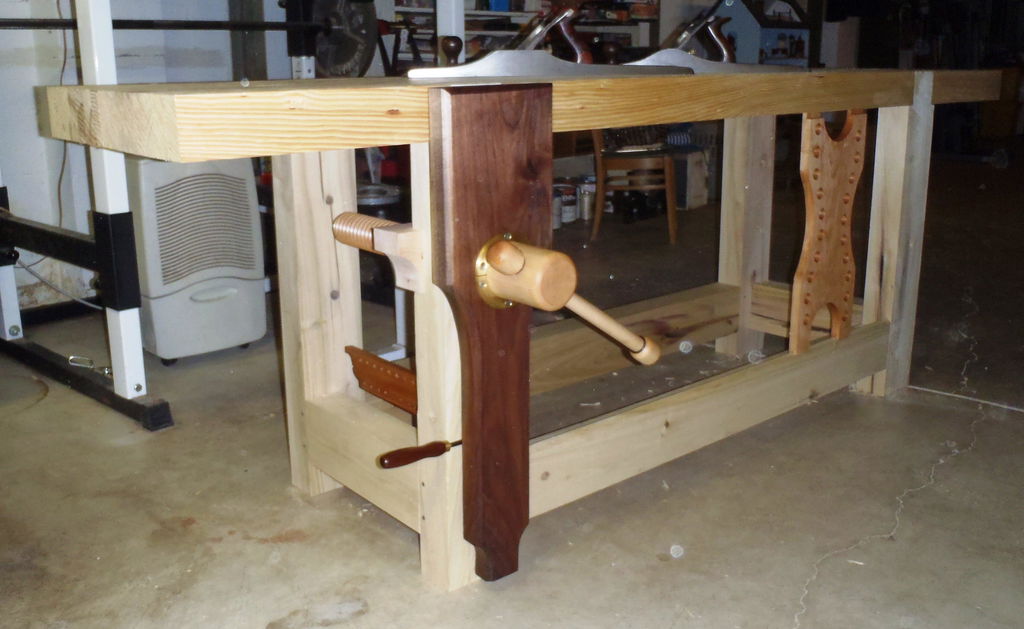
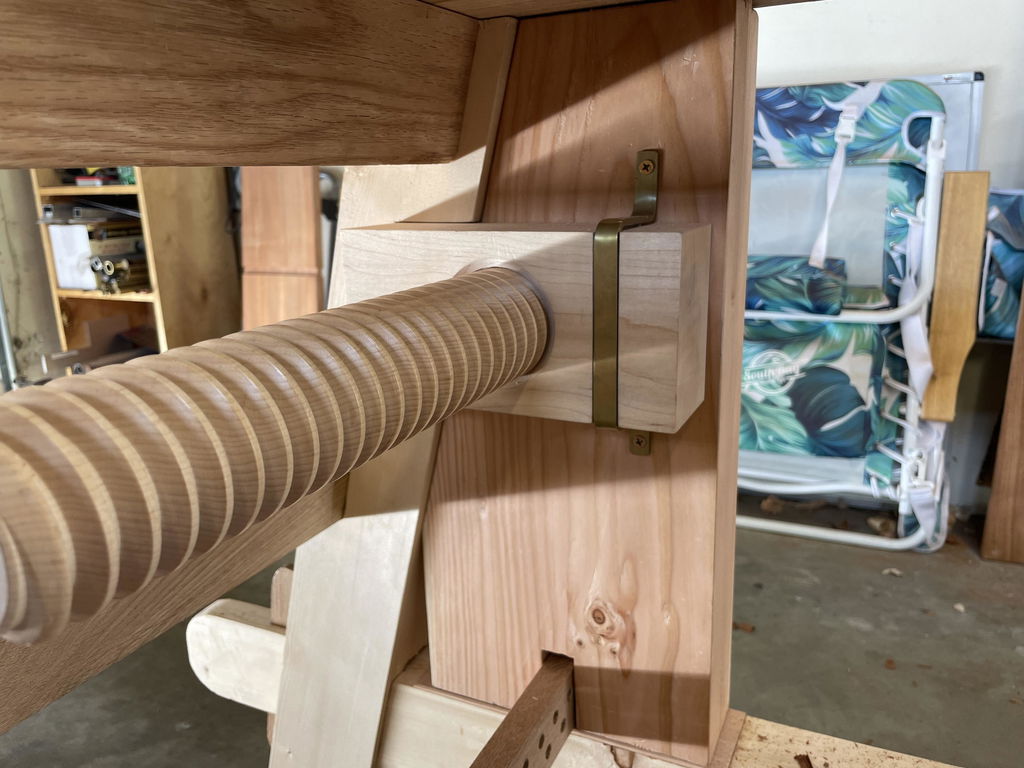
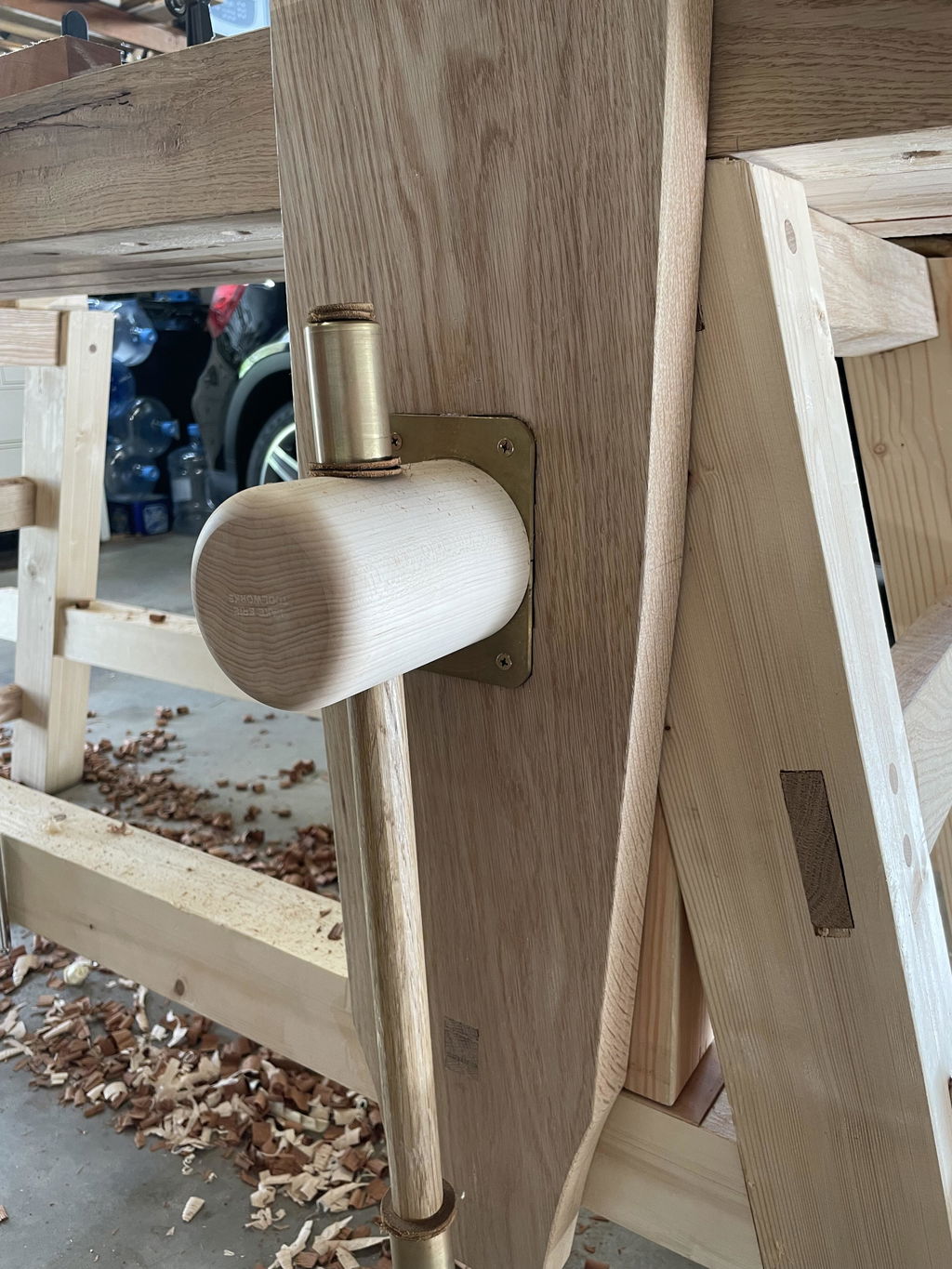
Leg vise. A tall wooden chop that pivots near the floor, with the screw through the bench leg. It has a huge clamping area, deep capacity, and nothing in the way above or beside the jaw. It's the classic choice for a Roubo-style bench. A leg vise needs a parallel guide (or a scissor/cross mechanism) near the bottom to keep the chop square as it opens.
Face vise. A wooden jaw mounted on the front apron of the bench, often with guide bars. It's simple to install on an existing bench and common on Nicholson and other English-style benches.
Twin screw vise. Two screws spread across the front of the bench, so a wide board can pass between them. Great for clamping wide panels and doors on edge. It's the vise on Holtzapffel and Dominy benches.
Shoulder vise. Mounted on a frame that sticks out from the front corner of a Scandinavian bench. It grips work vertically with nothing below the jaw, so long boards hang straight down. A favorite for dovetails. Not as popular these days but it's an excellent choice and what I prefer.
End vises: holding work flat
Wagon vise. A sliding block with a dog hole, running in a track inside the bench top. It clamps boards flat between bench dogs and doesn't rack or sag. See my wagon vise guide for details.
Tail vise. A traditional L-shaped end vise. It clamps between dogs and can grip work in its jaws, but it's more complex to build and can sag over time depending on how it's constructed.
Add-on vises
Moxon vise. A twin-screw vise that clamps on top of your bench and raises the work for sawing. If you cut dovetails, it's the most useful add-on you can buy. It works on any bench, or even a kitchen table. See my Moxon vise guide.
Cast iron quick-release vise. A metal vise bolted under the front of the bench, with a quick-release screw for fast adjustments. A good option if you want something you can install in an afternoon on a bench you already have.
Wood or cast iron?
Both work. A wooden vise you build into your bench gives you a bigger jaw, more capacity and a traditional look, and it's kind to your work. A cast iron vise is quicker to install and adjust. Both have their place.
Common bench and vise pairings
- Roubo or Moravian: leg vise and wagon vise
- Shaker: leg vise plus a wagon or tail vise
- Nicholson: face vise
- Scandinavian: shoulder vise plus a wagon or tail vise
- Holtzapffel or Dominy: twin screw vise
For the full list with links to customer builds, see my Vise Selection Chart.
What I make
- Wooden vise kit for leg, face, tail and twin screw vises, in Standard or the faster 2X size
- Wagon vise kit and shoulder vise kit
- Moxon vise in Standard and Lite sizes
- Milwaukee Tool cast iron vises, made in the USA
Every screw is hard maple, milled from a solid billet in Erie, Pennsylvania. Every vise I make comes with 30-day returns and a lifetime warranty, and ordering two or more vise kits gets you Bench Builder pricing automatically. Not sure what your bench needs? Email info@lakeerietoolworks.com with a sketch or photo and I'll help you sort it out.
Nick Dombrowski, toolmaker