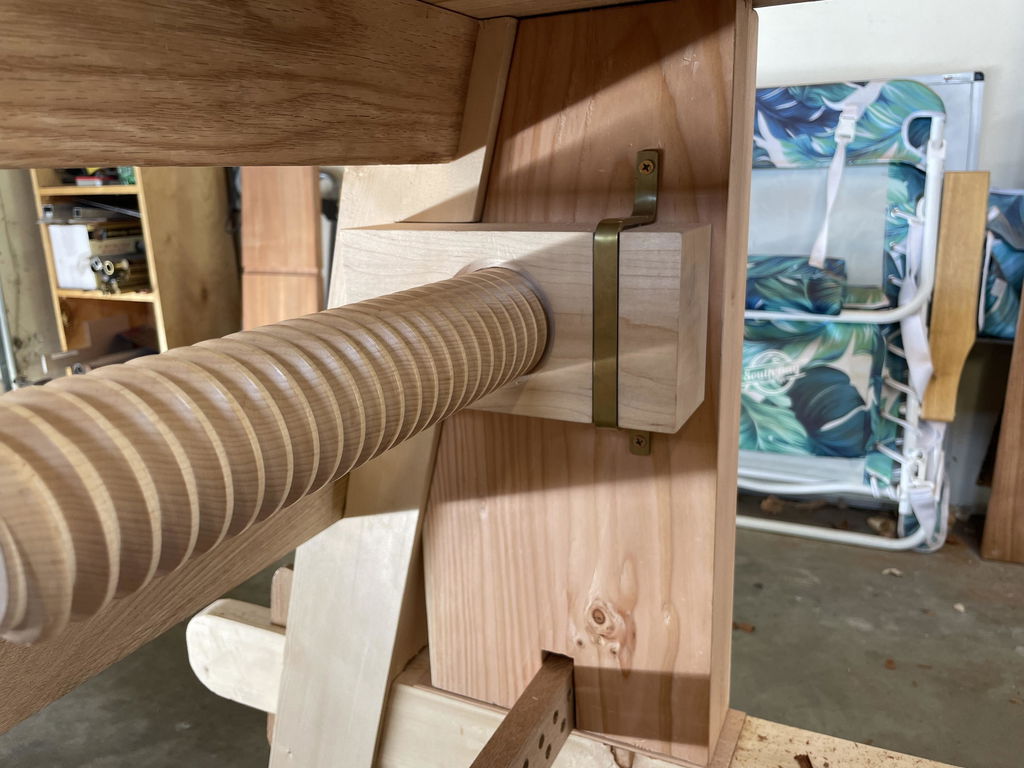
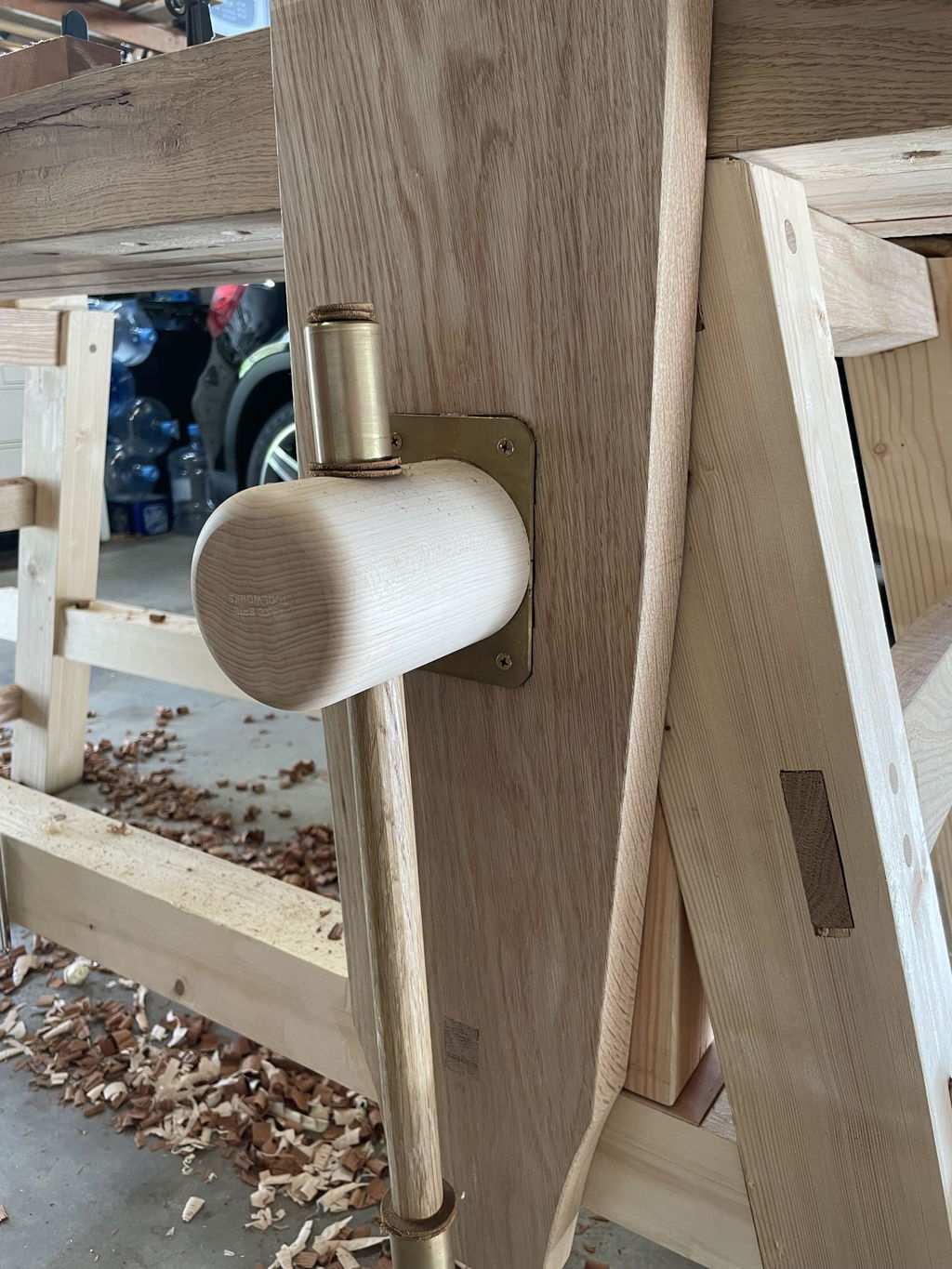
Here are pictures for your workbench contest. This is my left-handed split top with two Lake Erie wooden screws for the leg vise and wagon vise. 34 inches high, 24 wide, 88 long, hard maple base and 4 inch top. Tiger maple for leg vise, deadman, and handles. Wenge handle caps. Danish oil finish.
The bench journey: I have been a hobbyist woodworker for 30 years. Years ago I purchased a very old leg vise with two 3 foot wooden jaws, metal screw-handle-and angle iron metal jaw caps. While it was a metal working vise, I used it my shop and loved the leg vise concept.
In about 2001, I inherited from my father a pre-1900 German workbench that was weak, with rotten parts, a 2 inch warped knotty slab for a top, and two wooden screws for the face vise and tail vise. I faced a dilemma to keep the antique bench historical but not really functional or totally refurbish it piece by piece. The restored bench turned out great, but I still wanted to build a new bench. I read all the books, and analyzed all the styles and functions of benches, and all the new vises on the market. From the antique bench I learned I didn’t want a pedestal base, a tool tray, a 2 inch top, a small face vise or a tail vise, but I did want two wooden screws and a leg vise (but no metal vise screws).
I purchased the split top bench plans of a metal vise manufacturer, but purchased the Lake Erie wooden screw for the leg vise. I completed the entire base with the leg vise and deadman, and the back half of the top, but my new bench project stalled for over a year as I was not satisfied with the options for an end vise and not able to figure out how to use a Lake Erie large wooden screw for a wagon vise. Finally I contacted Nick at Lake Erie Toolworks who advised he was designing a wooden screw for a wagon vise. I waited, and after the availability of the Lake Erie wagon vise in the fall of 2012, I finally finished my bench. I am super pleased with both vises as they work very smoothly.
Robert P. - Bear, Delaware